


Here in Prince Edward Island, we know a thing or two about the legendary strength of a lobster's crusher claw. While our local waters produce marvels of natural engineering, a different kind of crustacean is currently applying serious pressure to the artificial intelligence landscape. Enter OpenClaw, the viral open-source AI assistant, and its heavyweight workflow engine: Lobster.
The Anatomy of OpenClaw Originally developed by vibe coder Peter Steinberger, OpenClaw has rapidly evolved from a standard chatbot into a fully autonomous, local-first AI agent. Unlike conventional AI that sits on a remote server waiting for your next prompt, OpenClaw lives on your own hardware and actively works across the platforms you already use, including Discord, Telegram, Google Chat, iMessage, WhatsApp, and Slack. But raw intelligence isn't enough for true automation; an AI needs a reliable mechanism to interact with complex systems without making catastrophic mistakes. That is where Lobster comes in.
The Crushing Strength of the Lobster Shell If OpenClaw is the brain of the operation, Lobster is the muscle. Lobster is a native workflow shell designed specifically for the OpenClaw ecosystem, functioning as a typed, local-first macro engine. Instead of forcing a Large Language Model (LLM) to orchestrate every single step of a complex multi-tool sequence—which burns through tokens and risks unpredictable behaviour—Lobster offloads that orchestration into a deterministic runtime.
This architecture provides a structural strength that traditional autonomous agents lack:
- Single-Call Efficiency: Rather than playing ping-pong with multiple back-and-forth API requests, OpenClaw executes one Lobster tool call and receives a structured result.
- Built-in Safety Gates: Before executing irreversible actions—like sending out dozens of emails or modifying a production database—the workflow halts completely. It waits for explicit human approval and issues a resume token, ensuring the AI never acts blindly.
- Resumable State: Complex pipelines do not have to restart from scratch if they pause for approval; they simply resume exactly where they left off.
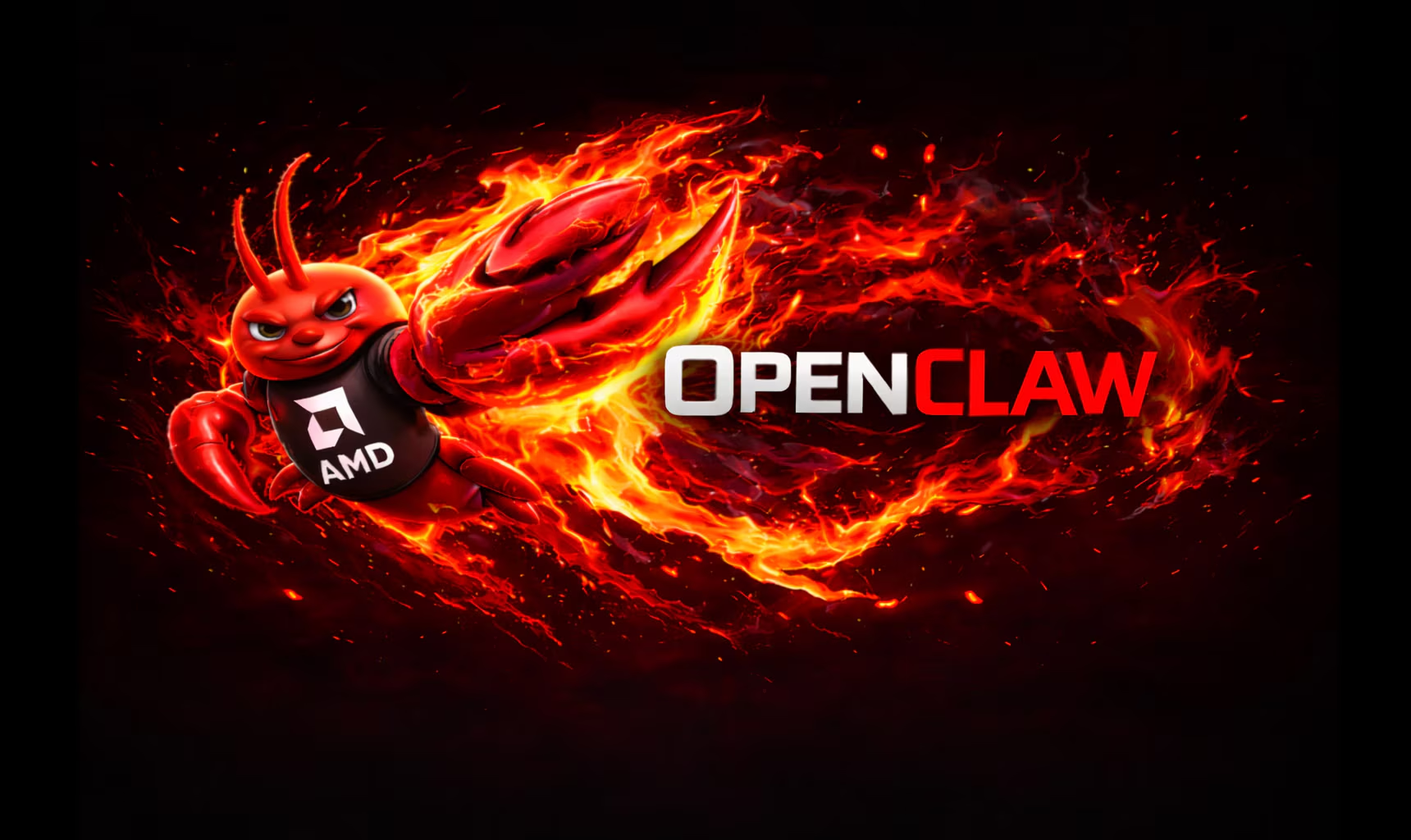
Fueling the Beast with Local Hardware The true power of this ecosystem is realized when paired with robust local computing. Because OpenClaw prioritizes complete data sovereignty, all your interactions, credentials, and sensitive files stay firmly on your machine. As hinted by the AMD-themed aesthetic in the featured image, running OpenClaw and its Lobster pipelines on high-performance local hardware (such as dedicated AMD processors or GPUs) ensures that these multi-step deterministic workflows execute with blistering speed. By removing cloud bottlenecks, users gain a private, hyper-responsive assistant capable of chewing through data-heavy tasks.
The introduction of the Lobster workflow shell marks the moment OpenClaw matured from a clever conversational assistant into a robust, enterprise-grade execution layer. By combining the intuitive adaptability of modern LLMs with the rigid, deterministic safety of a traditional macro engine, OpenClaw has forged the ultimate digital crusher claw.
Check out our chatbot on this site, made with prompts, using OpenClaw.
ASK US ABOUT HOSTING YOUR VERY OWN