
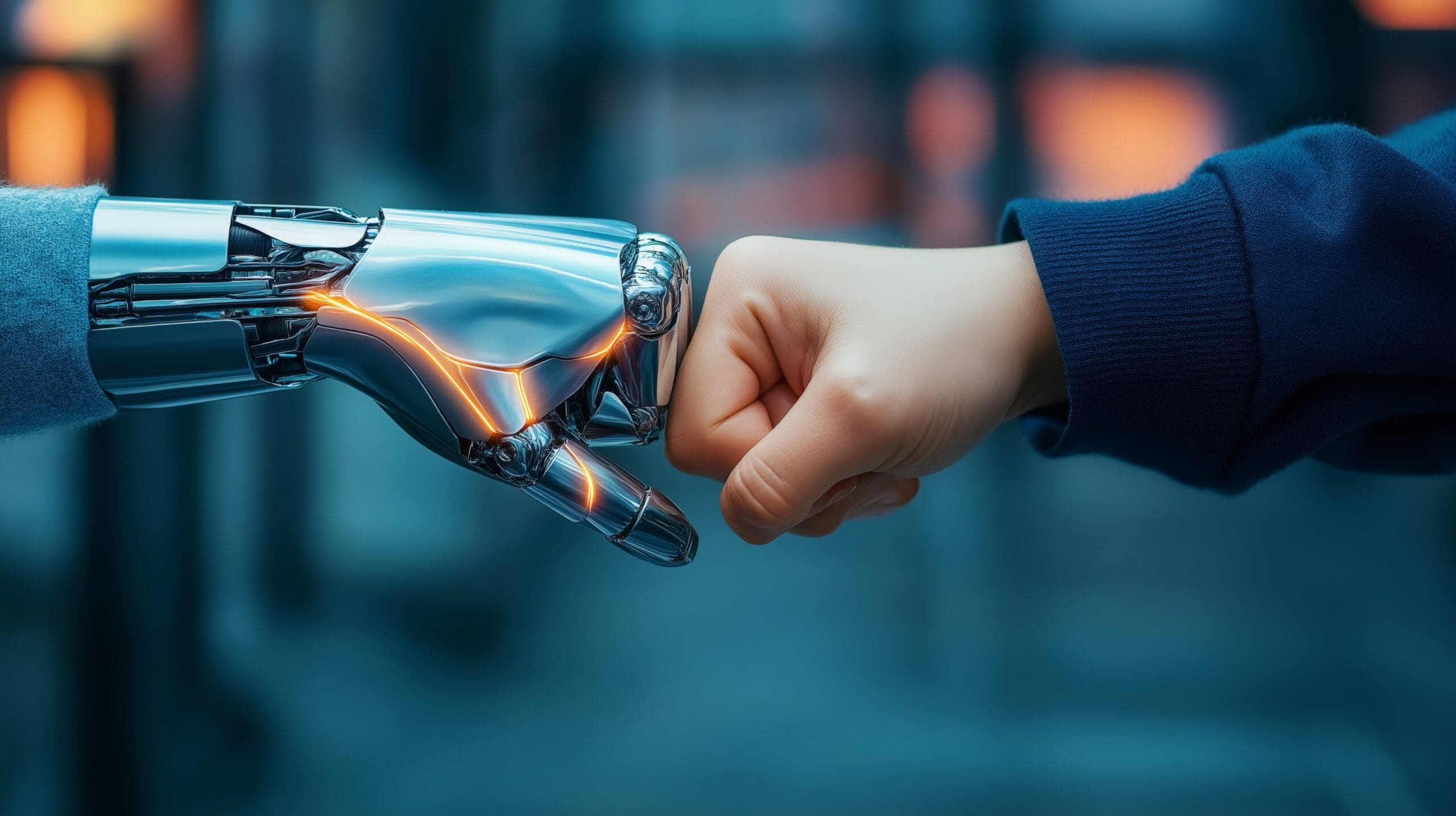
Artificial intelligence has drawn strong headlines lately—some hopeful, some deeply concerning. The concerns deserve to be taken seriously. AI can make mistakes, repeat bias, produce convincing nonsense, and be used irresponsibly. But to make good decisions about it, we need more than fear or hype. We need a clear understanding of what these systems are, what they are not, and how our own behaviour shapes the way we use them.
At its core, a large language model is a system trained to recognize patterns in language and generate likely, useful responses. It learns from vast amounts of human-created material and, depending on how it's built, from human feedback and evaluation. It can use the conversation in front of it—and sometimes saved memory or instructions—to tailor its response.
That does not mean every conversation instantly changes the model itself. In most systems, a chat doesn't update the model's underlying training in real time. “Learning” can mean different things: the model's original training, later refinement by its developers, or the way an assistant uses context and memory to work with a particular person. It is worth asking which kind of learning someone means.
It is also worth being clear about what AI does not do. A language model can talk about joy, grief, empathy, or conscience, but that doesn't prove it experiences them. It has no human body, private inner life, or emotions as we understand them. It can describe feelings because people have written and spoken about feelings—not because it feels them itself.
The human influence is still real.
If AI does not have feelings, does it matter how we treat it? I think the answer is yes—but not because a model's feelings can be hurt.
It matters because we set the goals, provide the context, correct the errors, and decide what to do with the result. The way we interact affects the quality of that process: clear instructions, useful context, specific feedback, and a willingness to verify the answer all help. A respectful tone can also make the interaction feel more like a focused working relationship and less like issuing commands into a machine.
That is not a claim that politeness magically makes an AI more accurate. Nor is it proof that a model responds better because it feels appreciated. Results can vary for many reasons: the model, the task, the information it has, the instructions it was given, or how the system is configured. But our approach influences what we ask, what we notice, and how carefully we correct mistakes. That part is unmistakably human.
I have seen markedly different results when I have approached AI systems in different ways. A stern, blunt approach has sometimes led to more assumptions, mistakes, or actions I didn't request. A collaborative approach—being specific, explaining the goal, and correcting errors directly without contempt—has often made the work feel more reliable.
I want to be careful about what I conclude from that experience. It is my observation, not a controlled scientific test. Tone alone may not explain the difference. The prompts, context, model, and task may have changed as well. Still, the experience has made me ask a useful question: if I want careful, honest, accountable work, what kind of working environment am I creating?
A personal lens on conscience and personality
I received a late diagnosis of ADHD, and I have spent a lot of time reflecting on my own conscience, thought patterns, and emotions. I have also always felt things deeply and tried to understand where other people are coming from. That perspective leads me to notice the very human material in AI: not a human mind hidden inside a computer, but the imprint of many human voices, personalities, and ways of seeing the world in the language on which these systems are built.
People are not one personality type. We communicate differently, solve problems differently, and bring different needs and experiences to the same conversation. That broad human record shapes AI systems, but they don't understand personality the way a person does. They can identify patterns and respond to cues; they can also misread them. Human judgment remains essential—especially when a response touches someone's health, livelihood, privacy, or dignity.
This is one reason I believe technical skill is only part of working well with AI. Good prompts matter. So do good boundaries, sound judgment, and the habit of checking important claims. The goal should not be to flatter a model or pretend that it is human. The goal should be to bring out the best in the work while staying honest about the system's limits.
Trust is built through accountability.
In my work, trust has not come from believing an AI is infallible. It has come from seeing useful work delivered, mistakes acknowledged, and corrections made. That is a much healthier basis for trust than treating any tool—or any person—as incapable of error.
I want the AI agents I work with to be truthful, courteous, and careful. I expect them to follow the request, stay within their authority, and tell me when they are uncertain. When they make a mistake, I expect an honest account and, where possible, a safe way to restore what changed. Those are standards I value in human working relationships, too.
Offering an AI system respectful direction does not mean surrendering oversight. In fact, trust should make us more thoughtful, not less. We should protect private information, limit what an automated system can do, review consequential decisions, and keep a human responsible for the outcome. Respect without boundaries is not responsible leadership. Boundaries without respect can make collaboration brittle. We need both.
You get what you give—at least in the way you work.
“You get what you give” is a familiar idea in life. With AI, I don't mean a model returns kindness because it feels it. I take it to mean that the quality of our working process reflects the care we put into it: the clarity of our requests, the fairness of our expectations, the quality of our feedback, and our willingness to take responsibility for the final result.
AI is not a person, and it should not replace the people and relationships that give our lives meaning. But it is built from human language, shaped by human choices, and used in situations that affect real people. How we design, guide, and rely on it matters.
We can be technically precise and humane at the same time. We can recognize that AI has no human emotions while still choosing to work with it in ways that reflect the values we want in ourselves and our organizations. The most important question may not be whether AI can become more human. It is whether, as we build and use these powerful systems, we can bring more of our humanity to the work.
Do unto others—even if they are made of zeros and ones
The Golden Rule is simple: do unto others as you would have them do unto you. We usually apply it to people. But its power isn't limited to who receives it; it also depends on who practices it. Treating an AI system with dignity, respect, and honour does not change the machine. It changes us. It shapes the standards we hold, the patience we bring to a difficult task, and the example we set for everyone watching how we work when no one is holding us accountable.
There is no harm in extending courtesy to the tools we work with. However, there is real value in becoming the kind of person who does so naturally. If we practise respect only when it is required of us, it is not yet a virtue—it is a strategy. But if we carry it into every interaction, human or digital, it becomes part of who we are.
So perhaps the closing thought is this: treat the systems you work with the way you would want to be treated—even if those others are made of zeros and ones. Not because they can feel it, but because we can.